
Arrest Warrants in Walker County
An arrest warrant is a court order that lets an officer take the named person into custody. In Walker County, the Magistrate Court expressly hears criminal warrant applications and issues both arrest and search warrants. The judge does not treat the application as proof of anything. What the judge decides is narrower: whether sworn facts establish probable cause, meaning a fair basis to believe an offense occurred and that the named person committed it. A Walker County case can start two ways. It may grow out of a law-enforcement investigation, or it may begin as a sworn private application. Either way, the applicant supplies offense information, witnesses, a sworn statement, and supporting facts. From there the Walker County magistrate has choices: issue the warrant, set an application hearing, deny the request, or refer a dispute to civil court. Once signed, the order authorizes arrest. Prosecution, bond, and trial remain separate later steps. The issuing court also handles first appearances, preliminary hearings, committal matters, and bail unless another court holds those tasks. A Walker County felony then belongs in Georgia Superior Court within the Lookout Mountain Judicial Circuit. A county misdemeanor may proceed in State Court. That split is why the warrant's issuing court and the later case court both matter when you make a Walker County warrant check.
Walker County Warrant Application Path
Walker County publishes a blank criminal warrant application. It serves an applicant seeking judicial review, not a person searching their own status. Expect to supply a report number, alleged offenses, Georgia code sections, witness and victim information, a sworn statement, a signature, and a date. A judicial section then records the outcome: warrant issued, hearing set, request denied, or the dispute sent to civil court.
- An applicant gives sworn facts and any requested support to Walker County Magistrate Court.
- A magistrate reviews the application and may require a hearing before deciding it.
- If probable cause is found, the judge signs process that identifies the alleged offense and person.
- Law enforcement receives the warrant for service, while later charging review follows its own path.
The official Walker County fee sheet lists a $20 criminal warrant application fee effective July 1, 2024. That fee buys an application review, not a status search or a recall. Walker County posts no separate charge for a warrant-status letter or a warrant recall. Confirm any cost and the filing method with Walker County Magistrate Court before you act. The Georgia court hierarchy source explains why a warrant application and the later criminal case can touch different courts.
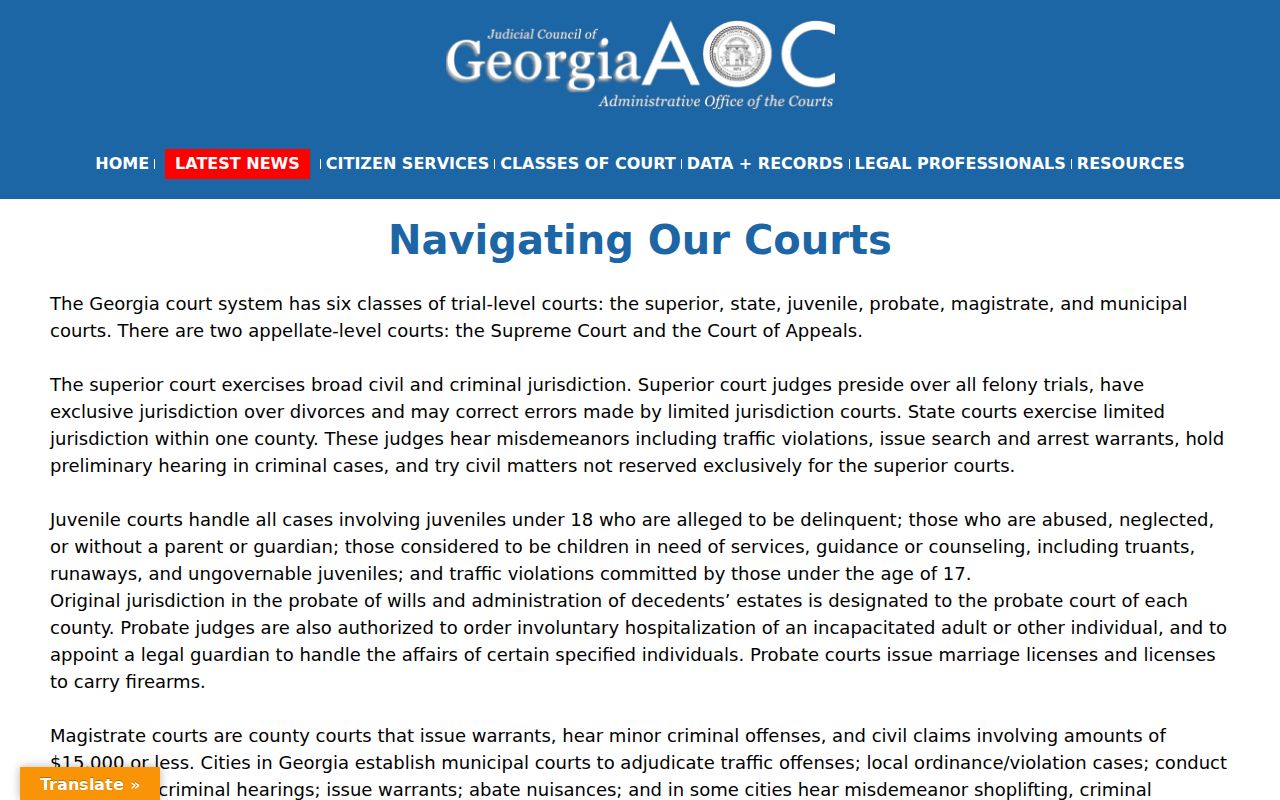
This official source explains each court's role in Walker County. It is not a warrant search and settles no person's status.
What a Walker County Arrest Warrant Contains
A filed Walker County arrest warrant may identify the subject, the alleged offense, the Walker County court, and issuance details. Access varies by stage and record. Walker County publishes no fixed warrant-number format, so treat no sample identifier as official. Ask the issuing clerk which number controls your inquiry. Use that exact value when seeking the docket or a copy.
| Warrant or case number | The court's identifier, if public. Use the exact number from an official notice or clerk. |
|---|---|
| Named subject | The person the order authorizes officers to arrest. Confirm identity with more than a name alone. |
| Charge or offense | The alleged Georgia offense tied to the probable-cause finding, not a finding of guilt. |
| Issuing judge and court | The judicial officer and jurisdiction that approved the process. |
| Bond information | Any amount or condition entered by the proper court. Availability can change after review. |
| Date and status | The issue date and any public served, active, recalled, or other later entry. |
Walker County Arrest Warrant Channels
Walker County posts no public active-warrant search, and Georgia runs no single statewide warrant database. The state's existing-warrant guidance points you to the sheriff of the county where the warrant may have been issued. Before calling, gather the full legal name, date of birth, possible county, approximate court date, and case or citation number.
Walker County Sheriff
105 South Duke Street, LaFayette, GA 30728
706-638-1909, Warrants extension 1227
Ask whether phone confirmation is available, whether ID is required, and what surrender or bond procedure applies.
Walker Magistrate Court
201 South Duke Street, LaFayette, GA
706-638-1217
Use for warrant-application and preliminary-process questions, not a broad statewide search.
The Walker County Clerk of Court maintains the filed Superior and State Court records. Its civil and criminal docket portal can help you spot a Walker County case, though a docket result is not always current warrant status. If the matter began with a city citation, call the clerk for LaFayette, Rossville, Chickamauga, or Lookout Mountain. A city case may stay outside the Walker County clerk's path entirely. For a document rather than live status, a narrow Georgia Open Records Act request can seek an existing non-exempt record. The Sheriff records form is built for incident and accident records, not a yes-or-no warrant check. County NextRequest is a general intake and prior-request portal, not an arrest warrant database.
Call first: Georgia warns that an in-person warrant inquiry may result in immediate custody if an active warrant is confirmed.
How Walker County Arrest Warrants Are Served
In Walker County, one arrest warrant can move through several sheriff units. The Court Services and Civil Process unit serves court orders and warrants from the Superior, State, Magistrate, Juvenile, and Probate Courts. It also runs court security, prisoner transport, and extraditions. Patrol handles its own share. The Road Patrol page states that patrol officers serve and execute warrants as well. City police can execute city process or refer it on within their authority. Contact often starts small. An officer may find someone during a traffic stop or through another agency. Arrest, booking, first appearance, bond review, and transport follow. The warrant itself promises no bond terms. Bond depends on the charge, the court, current policy, and judicial action. A 2025 Walker County release described a later out-of-area arrest and return after warrants were issued. That dated item shows cross-jurisdiction service only. It is not a current warrant roster, and it settles nothing about anyone's present status.
Walker County Service Roles
Several Walker County offices can touch one arrest warrant. None of them holds the whole record. The issuing judge controls the judicial order. The Walker County clerk keeps the filed docket and any court papers on hand, while the District Attorney reviews referred evidence and makes charging decisions. The Walker County Sheriff handles service, custody, and related operational records. Keeping those roles straight stops a jail report or incident form from being mistaken for the court's current warrant entry. For how referrals work, the Lookout Mountain Judicial Circuit District Attorney policies page describes law-enforcement referral and independent charging review.
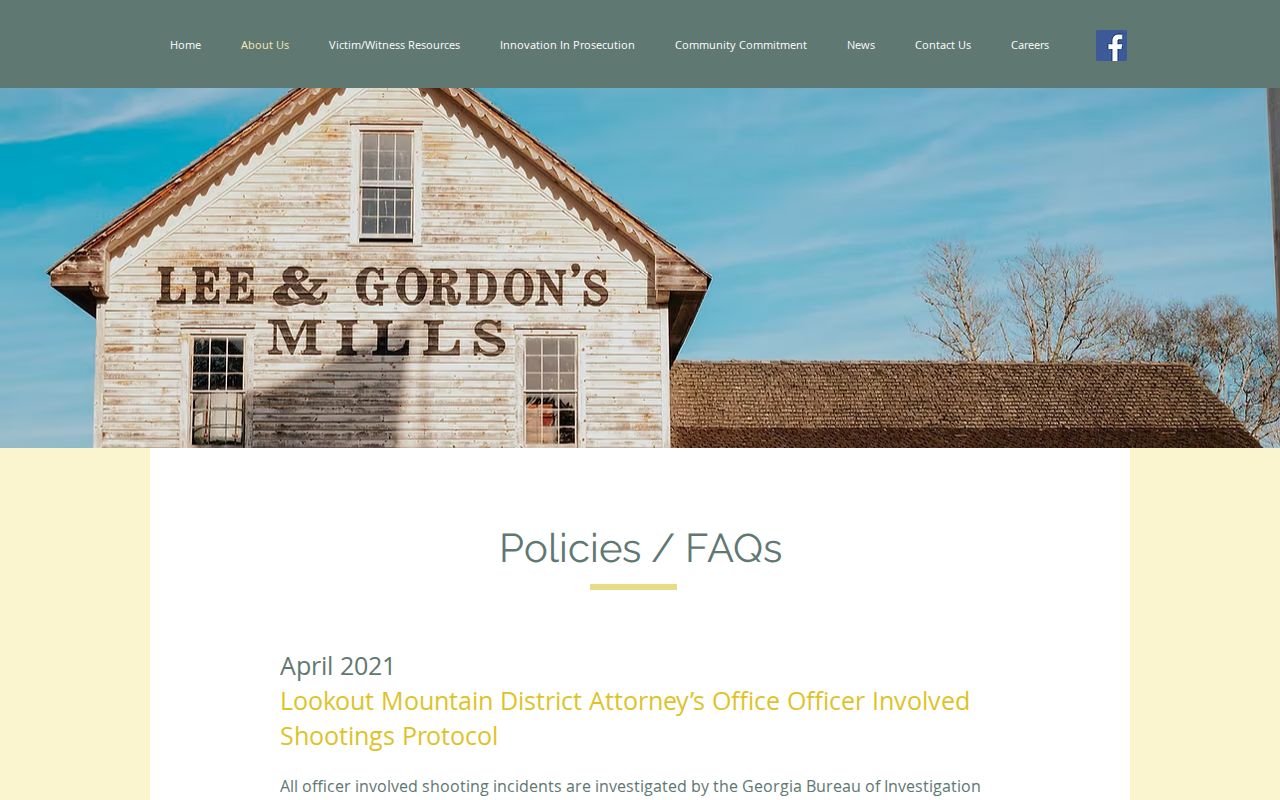
This is the official prosecution source for Walker County cases. The page sets out the office's own policies.
- Probable cause
- A fair basis for believing a crime occurred and the named person committed it.
- Service
- Execution of the court's warrant by an authorized officer.
- First appearance
- An early court hearing after arrest addressing rights, charge information, and other initial matters.
- Recall or quash
- Court action withdrawing or setting aside a warrant. Only the proper court can confirm it.
Note: Court Services figures from 2011 are historical only and do not show the present number of Walker County arrest warrants.
Arrest Warrant vs Summons vs Bench Warrant
Walker County courts use three different papers. An arrest warrant authorizes custody after a probable-cause finding. A summons orders an appearance, not an arrest. A Walker County bench warrant usually follows a missed court duty or other failure to comply. Trust the words on the paper and the clerk's current entry, not assumptions about how the case began.
| Feature | Arrest Warrant | Summons | Bench Warrant |
|---|---|---|---|
| What it directs | Law enforcement takes the person into custody. | The recipient appears as directed. | Law enforcement may arrest for a missed court duty. |
| Typical basis | Probable cause for an alleged offense. | A charge or proceeding allowed to start without custody. | Failure to appear or comply with a court order. |
| Issuer | A judge or magistrate. | A court or other authorized official. | The judge responsible for the pending matter. |
| Practical response | Confirm, seek counsel, and plan surrender and bond. | Appear on the stated date and follow the notice. | Ask the issuing court about appearance and recall. |
Walker County Case and Service Records
A Walker County warrant leaves records in several places. The court file holds the judicial action and later docket events. Sheriff records cover investigation, service, arrest, and booking. A daily jail report is just that. It publishes arrests and bookings, not a full warrant ledger. The $20 local criminal-history route is a GCIC history process, not a certification that no active warrant exists. For misdemeanor and traffic cases, the official Walker State Court page names the county court source.
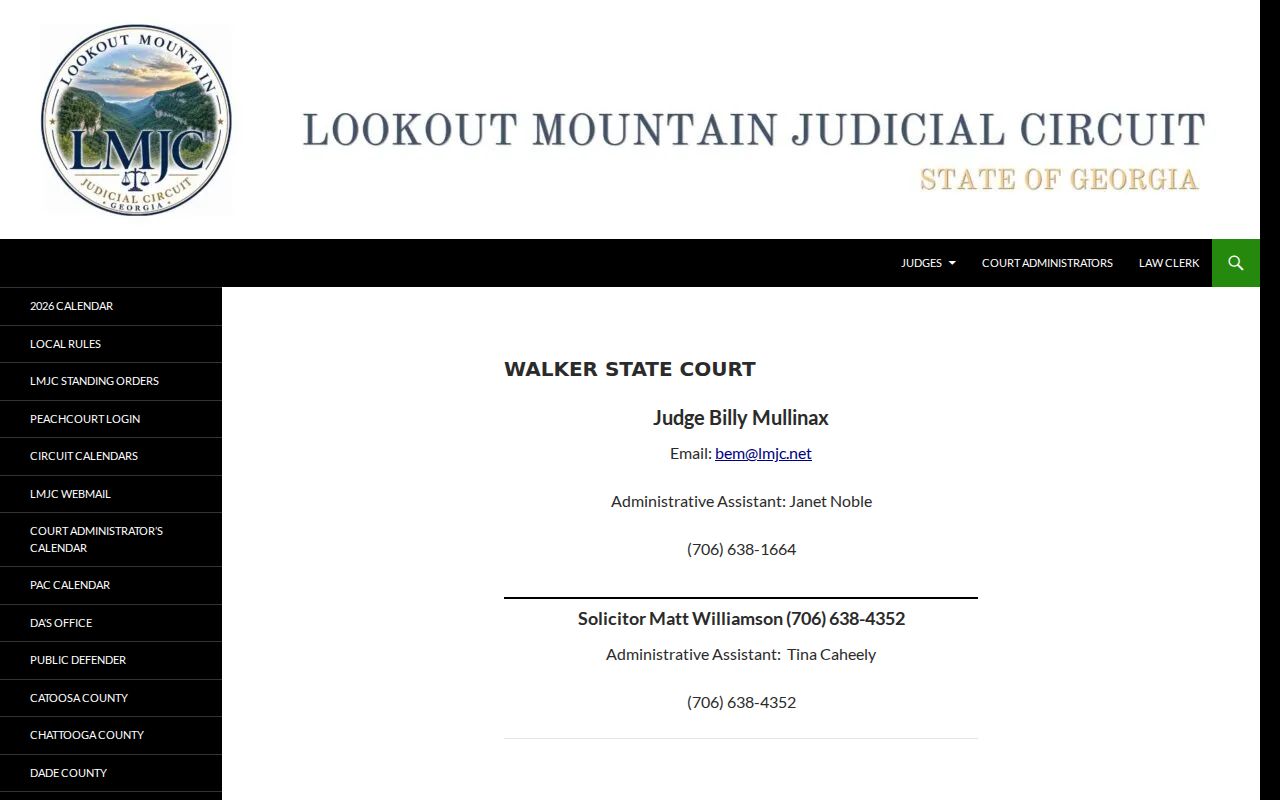
The Walker State Court page helps route filed case questions. It does not display or certify live Walker County arrest warrant status. Public access has limits too. An active investigation, unserved process, a juvenile file, a sealed case, expunged material, or protected victim information may all stay closed. The Georgia Open Records Act covers existing non-exempt records. No agency must build a new list. If part of a file is withheld, a requester may ask for segregable non-exempt portions and the cited legal basis. Need a filed Walker County Superior Court felony record? Call Clerk of Court Carter Brown at 706-638-1742 or use the official docket link. Walker County Sheriff incident records go through the Sheriff's records custodian. Ask which office owns the exact document before paying any fee.
Walker County Warrants Across Jurisdictions
A Walker County warrant search cannot clear paper from another court. Other counties, cities, states, and federal courts keep their own records. Walker sits in the Lookout Mountain Judicial Circuit. That circuit spans more than one northwest Georgia county. Fort Oglethorpe complicates the map. It lies principally in Catoosa County, so a municipal matter there belongs with the Fort Oglethorpe clerk, not Walker County just because the person lives nearby. Federal cases add another layer. Walker County falls within the Rome Division of the U.S. District Court for the Northern District of Georgia. PACER shows public federal docket material. It is not an all-warrants database, and sealed or unserved federal process may not appear. Federal questions go to the federal clerk, defense counsel, or the agency named on the paper. The Walker County Sheriff states that Court Services handles transports and extraditions. So an active Walker County warrant may be served elsewhere, with a return to Walker County after. Bond, waiver, hearing, and transport rules are legal matters. Ask counsel rather than trusting a county website result.
What to Do If There's a Warrant for You
Call before you walk in. The Walker County Sheriff Warrants extension can tell you whether a warrant is still active, and the issuing court can confirm the rest. Get every detail in writing: full name, date of birth, court, warrant or case number, alleged offense, issue date, and current status. Ask about bond too. Find out whether bond has been set and which Walker County court will hold the first appearance. Never show up at an office without first asking about custody risk. A lawyer should review everything before you give any statement or arrange a surrender. Counsel can pull the record, contact the proper court, discuss a voluntary walk-in, and check whether bond can be posted. A motion to recall or quash asks the issuing court to withdraw or set aside the warrant. Filing one does not make the warrant inactive. The court's own confirmation is the only proof. Eligible defendants who cannot afford counsel can turn to the Walker Public Defender office. It sits at 101 Napier Street in LaFayette. The number is 706-638-3290. Eligibility and representation are decided by that office and the Walker County court.
Important: Talk with counsel before surrender; an active Walker County arrest warrant may lead to custody during any law-enforcement contact.
Save every paper. File copies of the bond receipt, court order, recall entry, release paper, and new hearing notice where you can find them again. Payment alone may not close the case. Booking alone does not recall the warrant either. After any court action, recheck with the issuing Walker County clerk, since another portal may still show old information. Call ahead to confirm extensions, hours, and bond policy before you rely on them.